The rules of play: how a roll is resolved, what a character is made of, combat, damage, Rift Energy, starships, creatures, advancement and equipment.
Beta v0.78.5
tgg.legendsoftolria.com
Tome I
Rules Sourcebook
The rules of play: how a roll is resolved, what a character is made of,
combat, damage, Rift Energy, starships, creatures, advancement and
equipment. Use the contents to move
between chapters, or download the whole book as a PDF.
How anything is resolved, and the numbers every character carries.
The Table
The Galactic Game is played by conversation. The GM describes a
situation, each player says what their character does about it, and
dice settle any outcome that is in doubt. The two roles below divide
the work of the table between them.
The players
Each player runs one character and speaks for them. What that
character does is the player's decision alone, and no one at the
table overrides it, the GM included. In return, a player says what the
character is attempting, lets the GM name the roll, and gives the
character something to want.
At the table. You do not need to know the rules to
play. Say what you want to happen, and the GM tells you what to roll.
The GM
One person runs the world. The GM describes what the characters
perceive, speaks for every creature the players do not control,
decides what a situation calls for, and rules on anything the rules do
not cover. The GM favors no side and protects no plot; the world
responds to what the party does.
When a rule is unclear during play, the GM makes a ruling and play
continues. Look the rule up after the session and apply the written
rule from then on.
Division of labor
Players
GM
Decide what their characters do
Describes what the world does back
Roll attacks, checks and saves
Sets the DC, and rolls for everything else alive
Know their own sheet
Knows the situation, and is allowed to improvise it
Say what the character wants
Makes wanting it cost something
Session zero
Before the first session, agree what the campaign is about and what it
will leave out. The system covers pre-industrial worlds and
interstellar ones, so "a game in this setting" is not yet a decision.
Pick a faction's space, a tech tier (see
Equipment) and a tone, and
say out loud which subjects the fiction will not touch.
See also. The
GM's Manual, Tome XV,
holds the GM's side of this chapter: encounter budgets, turn order,
travel, hazards and running a session. It draws its terrain and
hazards from the
Environments
catalog. A player does not need either.
Making a Character
Make a character in the order below and record each result on the
sheet as you go. The Player's Manual carries the same checklist with
every catalog it draws from and a worked example; the Workspace walks
the same steps and keeps the sheet.
Ancestry. Size, speed, languages and the traits you
were born with.
80 to choose from,
counting sublineages.
Origin. The life before the campaign: two skills, a
language or tool, ability adjustments, a starting kit and one
feature that life still gets you.
26 origins.
Class. Your hit die, saving throws, training and
level 1 features.
16 classes,
each with a subclass chosen at level 3.
Ability scores. Generate six scores (see
Abilities), then add
your ancestry's +2 to one score and +1 to a different one, and your
origin's adjustments.
Skills. The number your class grants from its list, plus your origin's two and any from your ancestry.
Equipment. Your origin's starting kit, or buy from the catalog.
Finish the sheet. Hit points, Armor Class,
initiative, passive Perception, attack bonuses and damage, and, if
you cast spells, your spell save DC, spell attack modifier and
casting resource.
Name and the rest. Everything else can be filled in at the table.
Every roll in the game follows one procedure: roll a d20, add what
applies, and compare the total with the number the roll has to meet.
Advantage, contests, passive checks and natural 20s and 1s adjust that
procedure, and Abilities,
Proficiency and
Skills name what is added to
the roll.
Roll a d20, add what applies, and compare the total to a
target number. If the total equals or exceeds the target, you
succeed. The target is a Difficulty Class (DC) set by the GM, an
opponent's Armor Class (AC), or the result of another creature's roll.
An attack roll, an ability check and a saving throw are all this roll
with different modifiers. For example, Vey, a Rogue with a Dexterity
modifier of +3 and a proficiency bonus of +2, picks a lock against
DC 15: she rolls a d20, adds 3 for Dexterity and 2 for proficiency,
and succeeds on a roll of 10 or higher.
Difficulty Classes
Task
DC
Trivial, but worth a roll
5
Easy
10
Moderate
15
Hard
20
Very hard
25
Near impossible
30
Advantage and disadvantage
When circumstances strongly favor you, you have
advantage: roll two d20 and use the higher result.
When they strongly hinder you, you have
disadvantage: roll two d20 and use the lower. Neither
stacks; two sources of advantage are still one extra die. If you have
both advantage and disadvantage on the same roll, they cancel and you
roll one d20, however many sources of each apply.
Contests
A contest is a roll made by two creatures acting
against each other. Both make the named check and the higher total
wins. On a tie the situation does not change, so the creature trying to
change it loses the contest.
Passive checks
passive check = 10 + every modifier that applies to the check
A passive check is a check no one rolls. The GM uses
it for what a creature notices without searching, and a creature's
passive Perception is the DC a Hide attempt must beat. Advantage adds
5 to a passive check and disadvantage subtracts 5.
Group checks
When the whole party attempts the same thing together, such as
sneaking past a checkpoint or climbing a hull in a storm, everyone
rolls the check. If at least half of them succeed, the group
succeeds.
Tasks that take more than one roll
Some work takes several contributions: slicing a terminal while a
trace closes in, chasing a courier through a market, winning over a
council. The GM runs these as a progress track: a
goal of 2, 4 or 6 steps, and often a pressure track that fills when
attempts fail. Each successful check fills a step. Each attempt has to
try something new, so the party cannot win by rolling the same check
until it comes up. The procedure is
Extended Tasks in
the GM's Manual.
Critical Success and Failure
A natural 20, a 20 showing on the die, succeeds. A
natural 1 fails. This applies to every d20 roll in
the game: attack rolls, ability checks and saving throws. The total is
not consulted; the 20 beats any DC or AC, and the 1 misses whatever
the bonuses would have reached. No feature changes this unless it says
so.
On an attack roll, a natural 20 is also a critical
hit: roll the attack's damage dice twice and add the modifier
once. A natural 1 on an attack roll is a critical
miss.
A natural 20 or a natural 1 also widens the outcome. A
critical success does what was attempted and adds
one result no one asked for, chosen by the GM: the lock opens and the
character learns how the mechanism works, or the lie holds and the
guard volunteers a name. A critical failure fails
and adds a cost in the same way: the pick snaps off in the lock, and
the mechanism is now jammed, or the jump falls short and something
below hears the landing. The GM describes the added result before the
total is announced.
The limit on both is plausibility. A natural 20
succeeds at the thing attempted and widens it; it does not reach an
outcome that was impossible when the dice were picked up. A character
who cannot reach a ledge does not roll to reach it, and a character
who rolls a 1 crossing a room does not fall off the planet. If an
action has no version that could work, the GM says so before the
roll, and there is no roll. The question a natural 20 answers is
what else happens, and inside that limit the added result
can go in either direction.
Abilities
Six ability scores describe what a character can do before training
is counted. A new character generates the six by one of the three
methods at the end of this chapter.
Each score has a modifier, and it is the modifier,
never the score itself, that is added to a roll.
modifier = (score − 10) ÷ 2, rounded down
Ability
Governs
Strength STR
Force, melee weight, and what you can carry.
Dexterity DEX
Agility, aim, and avoiding hits.
Constitution CON
Endurance. Hit points, and holding concentration.
Intelligence INT
Study and deduction. The spellcasting ability of the Engineer and Wizard.
Wisdom WIS
Attention and attunement. The spellcasting ability of the Cleric, Druid, Monk and Ranger.
Charisma CHA
Presence and force of self. The spellcasting ability of the Bard, Paladin, Sorcerer and Warlock.
A score of 10 gives a modifier of +0. For example, a Strength score of
16 gives a modifier of +3, and a score of 7 gives a modifier of −2 (7
minus 10 is −3, halved and rounded down). An Ability Score
Improvement (see
Advancement) cannot
raise a score above 20, and that is the only cap. A feature, a class
ability, an item or an ancestry trait can raise a score past 20, each
by what it says.
Generating scores
Use one of the following methods, agreed with the GM before characters are made.
Standard array. Assign 15, 14, 13, 12, 10, 8
to the six abilities in any order. This is the fastest method and
the most predictable.
Point buy. Spend 27 points from the
Point-buy cost table. Every score starts at 8, and no score may
exceed 15 before ancestry bonuses.
Rolling. Roll 4d6 and drop the lowest die, six
times, and assign the six totals in any order. Rolling can produce
an 18 at level 1 or a set with nothing above 13.
Point-buy cost
8
9
10
11
12
13
14
15
0
1
2
3
4
5
7
9
Proficiency
Proficiency is training with a skill, a saving throw, a weapon or
armor category, a tool or a language. Expertise doubles the bonus for
a skill, and armor and weapons you are not trained with carry the
penalties under Training.
When you are proficient with what a roll uses, add your
proficiency bonus to the roll. The bonus is set by
character level, as the table shows, and it is never added twice to
the same roll.
Proficiency bonus by level
1–4
5–8
9–12
13–16
17–20
+2
+3
+4
+5
+6
Characters are proficient in some mix of skills, saving throws, weapon
categories, armor categories, tools and languages. Class and
origin grant most of
them; ancestry and
feats add the rest.
Expertise
Expertise in a skill doubles your proficiency bonus
on checks with that skill. A few features grant it, and it is the only
case in which the bonus counts twice.
Training
Armor and weapons are the two proficiencies a character can be caught
without, because anyone can pick up either. Every suit of armor and
every weapon names its category. You can use equipment from a category
you are not trained in, at the penalties in the Untrained use table.
Untrained use
Equipment
Penalty
Armor or a shield
Disadvantage on every attack roll, ability check and saving throw
that uses Strength or Dexterity; your speed drops by 10 feet; and
you cannot cast spells while it is on.
A weapon
You add no proficiency bonus to its attack rolls, and you make
them at disadvantage.
At the table. Every creature is proficient with its
own unarmed strike, so an unarmed strike always adds the proficiency
bonus. The disadvantage from untrained armor still applies to it.
Two further penalties belong to the armor itself and apply whether or
not you are trained in it. Armor marked as loud gives
disadvantage on Dexterity (Stealth) checks. Armor with
a Strength requirement your score does not meet reduces your speed by
10 feet. Speed penalties from armor do not stack:
untrained use and an unmet Strength requirement together still cost 10
feet.
See also. Class is the usual source of this training,
and feats widen it:
Armor Training for light and medium armor and shields, Heavy Armor
Training for heavy and powered armor, Martial Weapon Training for
martial weapons, Heavy Weapon Training for heavy weapons, Firearm
Training for firearms, and Energy Weapon Training and Exotic Weapon
Training for the rest. Between them they cover every category in the
catalog, and every item's entry names the training it requires.
Skills
A skill is a field of training tied to one ability. The twenty-one
skills are listed below under the abilities they use.
A skill check is an ability check that uses a skill:
roll a d20 and add the ability's modifier, plus your proficiency bonus
if you are proficient in the skill. A check is written as the ability
followed by the skill, so a Dexterity (Stealth) check adds your
Dexterity modifier. The ability listed with a skill is its default.
The GM may pair a skill with another ability when the situation calls
for it, such as a Strength (Intimidation) check when the threat is
physical.
Strength
Athletics
Dexterity
Acrobatics
Piloting
Sleight of Hand
Stealth
Intelligence
Arcana
History
Investigation
Lore
Nature
Religion
Technology
Wisdom
Animal Handling
Insight
Medicine
Perception
Survival
Charisma
Deception
Intimidation
Performance
Persuasion
At the table. Constitution governs no skill. It sets
hit points (see Hit Points &
Dying) and concentration saving throws (see
Rift Energy).
Saving Throws
A saving throw is a roll made to resist something that happens to you.
Your class makes you proficient in two of the six.
When an effect calls for a saving throw, roll a d20
and add the modifier of the ability the effect names, plus your
proficiency bonus if your class grants proficiency in that saving
throw. Every class grants proficiency in two. The effect names the
ability: a Dexterity saving throw against a blast, or a Wisdom saving
throw against a charm.
The DC of a spell's saving throw is the caster's spell save DC (see
Rift Energy). A feature, weapon
or item that forces a saving throw states its DC in its entry. For a
hazard or the environment, the GM sets the DC from the Difficulty
Classes table in Resolution.
Languages
Languages decide who a character can talk to. Speaking a language and
understanding it are tracked apart, and telepathy reaches a creature
whatever it speaks.
Every ancestry grants Common and at least one other
language. Common is the trade language of the Prime Plane, and
Galactic Standard is the working language of the space lanes; between
them they cover most ports a party will land at. Every other language
marks where its speaker is from. There are 36
languages in all.
Speaking and understanding a language are tracked separately. A
creature can understand a language without being able
to speak it, which is the usual state of a creature without the mouth
for it: a Thuul drone follows Common and answers in pressure changes,
and a raised skeleton obeys an order in Common and says nothing. A stat
block lists the two apart. Speaking a language always includes
understanding it.
Literacy comes with speech unless a feature says
otherwise. Ciphers, cants and liturgical registers are languages in
their own right; a speaker of Common cannot follow Meridian Cant.
Telepathy
Telepathy is a sense. It carries meaning to any
creature within its range whether or not the two share a language, and
it is one-way unless the effect says otherwise. A creature with no
language at all can still be reached by telepathy.
Storytelling
Use this chapter to contribute to a scene: make your character's
intent clear, build on what the others offer and play through the
consequences of a roll. Guidance for preparing and running scenes is
in the GM's Manual.
Intent
Say what you want to happen before naming a roll. "I want to get past
the checkpoint without the officer logging my face" gives the GM a
goal to work with and several ways to answer it; "I roll Deception"
gives the GM a number. The GM names the roll from the intent.
Character goals
Give your character a goal that can guide their decisions in any
scene, including one that has nothing to do with their abilities.
Write down what they are trying to get and what they will not do to
get it, and name someone who knows them well enough to call them on
either.
Offers
When another player builds on something you said, build on it in turn
instead of correcting it. When the GM hands you a detail you did not
ask for, use it.
Cost
After a failed roll, play the consequence the GM describes instead of
negotiating it away. Decide how your character reacts and what they
try next.
Improvising
You will be asked what your character does about something no one
planned for. Two habits cover most of it:
Answer in the fiction. Reach for what is in the
room and on your sheet before reaching for a rule.
Bring things back. The contact from three sessions
ago, the debt no one settled, the ship left in a bad orbit. Reusing
what the table already remembers costs nothing and makes the world
continuous.
Sharing it
Everyone at the table gets to be good at something. If a scene belongs
to one character's specialty, look for the angle that brings someone
else in: the door the infiltrator cannot open quietly, or the officer
who will only speak to a noble.
See also. The GM's half of this chapter is in the
GM's Manual:
preparing situations instead of plots, failing forward, and what to do
when the party goes somewhere you have no notes for.
Exploration
Exploring a dangerous place runs in exploration
turns of about 10 minutes. Each turn the GM describes what
you can perceive, every player says what their character does, and the
GM says what changed. Crossing a world between places runs a day at a
time, and the GM's Manual has that procedure.
The exploration turn
The GM describes. What you can see, hear and sense
from where you are, and any danger that is plain to see. Nothing that
is plainly there needs a roll to notice.
You declare. Each character takes one activity for
the turn. Activities that do not get in each other's way happen at
the same time. If yours depends on someone else's, such as searching
a room another character is still unlocking, say so.
The GM resolves. A check is called for only where
the outcome is uncertain and matters. The turn's time passes, and
anything counting toward a deadline moves on.
The situation changes. The GM describes what is
different, and the next turn starts, or initiative is rolled.
Activities
Exploration activities
Activity
What it does
Keep watch
You notice what approaches with your passive Perception. A character keeping watch who notices an ambush rolls initiative normally.
Search
Search one room or area thoroughly: Wisdom (Perception) to find what is hidden, or Intelligence (Investigation) to work out what happened there.
Examine
Study one device, structure or body to learn what it is, what it does and whether it is safe, with Technology, Arcana, Medicine or the skill that fits.
Move quietly
Move at half pace. The party's Dexterity (Stealth) is a group check against the passive Perception of anything that might notice.
Work
Spend the turn on a task: forcing a door, rigging a bypass, treating a wound. A task that takes several turns is a progress track.
Navigate
Track the route. A party with a navigator finds its way back through a site without a check.
Rest
Light activity. Six turns of rest in a row are a short rest.
The list is a set of examples. Anything else your character could do
in ten minutes is an activity too: say what it is.
Into a fight
When exact timing matters, the GM calls for initiative. What the turn
already established carries over: positions stay where they were, a
door half-sliced stays half-sliced, and a character keeping watch
rolls initiative normally while anyone the ambush caught unaware rolls
with disadvantage, as Combat
describes.
At the table. The GM uses exploration turns when
time or danger makes the choices matter, and summarizes the walk back through rooms the party has
already cleared.
Social Interaction
When your character wants something from someone, the GM decides
whether that person agrees, refuses or might go either way. Only the
last needs a roll. You can speak in character or describe the
argument your character makes. The roll uses your character's skill.
Attitude
Attitude
Attitude
How they treat you
DC for an uncertain request
Friendly
Wants to help, within what they can afford.
10
Indifferent
Helps if it costs them little or pays them well.
15
Hostile
Wants you to fail, and helps only to save themselves.
20
Asking
Say what you want, and how you ask. Name the request
and the approach: an honest argument, a lie, a threat, a performance.
The GM sorts the request. If the person would agree
anyway, they agree. If they would never agree, they refuse, and the
GM tells you what might change their mind if your character could
know it. Otherwise the request is uncertain.
The stakes come first. Before an uncertain request
is rolled, the GM says what a success gets and what a failure costs.
Roll. Persuasion for an honest argument, Deception
for a lie, Intimidation for a threat, and Performance or another
skill where it fits, against the DC for the person's attitude. If
someone is actively working against you, such as a rival making
the opposite case, it is a contest instead, and a listener who
suspects a lie rolls Insight against your Deception.
Leverage
Leverage is a fact, an offer or a demonstration that
matters to what the other person wants. Each piece lowers the DC by 5,
each must be different, and two at most count. Anyone in the party can
find it: Insight to learn what the person wants, Investigation to turn
up evidence, Technology to prove a claim. A character standing beside
the speaker can take the Help action to give advantage. The rest of
the party does not roll the same argument again.
Trying again
A request that failed cannot be made again the same way. Something
has to change first: new leverage, a better offer, a different person
to ask, or a day for tempers to cool.
Limits
A natural 20 gets the most the person would ever
agree to. It does not get what they refused.
Player characters decide for themselves. A check
changes what a GM character does. When a GM character's argument
ought to land on a player character, the GM says how compelling it
is and the player decides. Only an effect that names a condition,
such as Charmed, controls a player character, and only as far as the
condition says.
In combat, asking someone to stand down, surrender
or hold fire is the Influence action, and the same rules apply.
Example. Liraen asks a relay operator, who is
Indifferent, for the docking codes: DC 15. Tamsin has already shown
her that the archive can be copied without her crew's personal files
(a Technology demonstration, leverage), and Vessa found her
unanswered pay claims in the relay's public log (Investigation, more
leverage). The DC drops to
5. Liraen rolls Persuasion, and a failure would mean she seals the
dock until the party leaves.
See also. For a negotiation with several sides or a
deadline, the GM runs a progress track: Negotiation in the GM's Manual.
Part II
Action Economy
What one turn buys, what spends it, the energy that fuels it, and how a character comes back.
Combat
Combat runs in rounds, and in each round every creature takes one turn
in initiative order. Damage and its types are in
Damage & Defenses.
Initiative
When combat begins, every participant rolls initiative:
a d20 plus their Dexterity modifier. Creatures act in order from the
highest result to the lowest, and the order holds for the rest of the
fight. A round is one pass through that order and
covers about six seconds, so everything in a round is happening at
once; the order is the sequence in which it is resolved.
At the table. Ties go to the higher Dexterity score,
then to the creature that is not a player character. A creature that
did not notice an ambush rolls initiative with disadvantage. There is
no surprise round.
The turn
Your turn is a budget of five things, spent
separately. You do not have to spend any of them, and spending one
never costs you another.
Budget
Allowance
Notes
Movement
Up to your speed
Split it however you like around everything else on this list.
Action
One
The turn's main thing. Attack, cast a spell, dash, or anything below.
Bonus action
One, if you have one to take
Never free-standing: something has to grant it.
Reaction
One per round
On anyone's turn, and only when its trigger happens.
Free interaction
One object
Draw a weapon, open a door, pull a lever. The second one costs an action.
At the table. The reaction is the one item in the
budget you can spend on any creature's turn, your own included. It is
spent when its trigger happens, usually on another creature's turn,
and it comes back at the start of your next turn.
Movement
Your speed is the distance in feet you can move on
your turn. It comes from your ancestry and is modified by armor,
conditions and features. You can split your movement before, between
and after the other things you do on your turn.
Movement costs
Movement
Rule
Difficult terrain
Each foot costs 2 feet of speed. Rubble, deep snow, a crowded deck, knee-deep water.
Prone
Crawling costs 2 feet per foot. Standing up costs half your speed. Dropping Prone costs nothing.
Climbing and swimming
Each foot costs 2 feet unless you have a climb or swim speed. A sheer surface or a strong current needs a Strength (Athletics) check.
Jumping
With a 10-foot run-up, a long jump covers feet equal to your Strength
score and a high jump reaches 3 + your Strength modifier feet. From a
standstill, halve both. Each foot jumped costs a foot of speed.
Falling
1d6 bludgeoning damage per 10 feet fallen, to a maximum of 20d6. You land Prone.
Flying
A flying creature falls if it is knocked Prone, Incapacitated or reduced to 0 speed, unless it can hover.
Other creatures
You can move through an ally's space, and through a hostile creature's
space only if it is two or more sizes larger or smaller than you.
Either space is difficult terrain, and you cannot end your move in it.
See also. Zero gravity, vacuum and overland travel are
under Worldbuilding in the
GM's Manual.
Mounts and vehicles
Mounting or dismounting a willing creature at least one size larger
than you costs half your speed.
A trained mount acts on your initiative and moves as you direct. Its only actions are Dash, Disengage and Dodge.
An untrained or intelligent mount keeps its own initiative and acts as it chooses.
If your mount is knocked Prone or moved against its will, make a DC 10 Dexterity saving throw or fall off and land Prone within 5 feet.
A vehicle moves on its driver's turn, and driving it takes the
driver's action. Its speed is on its entry. Where the entry gives no
speed, a ground vehicle moves 60 feet in a round and an atmospheric
craft moves 120 feet. A skid, a jump or a tight turn is a Piloting
check against a DC from the Difficulty Classes table in
Resolution.
A vehicle has hull points instead of hit points, and
at 0 hull points it stops until it is repaired. An attack against a
moving vehicle must meet 10 + the driver's Piloting modifier. A stopped
vehicle has AC 10.
Standard actions
The actions in this list are available to every character at every
level, and nothing has to grant them. A class feature that gives you a
new action adds it to this list; it never replaces one.
Attack action
Make one attack with a weapon you are holding or with an unarmed strike. Some features grant more than one attack with this action; when they do, they say so, and the attacks may be split between different targets.
Cast a Spell action
Cast a spell with a casting time of one action. A spell with a longer casting time is started with this action and continued on later turns; taking damage during that time forces a concentration check, and losing it wastes the slot.
Dash action
Gain extra movement equal to your speed for this turn. Difficult terrain, being prone and anything else that taxes movement taxes the extra movement too.
Disengage action
Your movement does not provoke opportunity attacks for the rest of this turn. It applies to every creature you leave the reach of, not only the one you were worried about.
Dodge action
Until the start of your next turn, attack rolls against you have disadvantage if you can see the attacker, and you make Dexterity saving throws with advantage. You lose this benefit if you are Incapacitated or if your speed drops to 0.
Help action
Choose one: give an ally advantage on the next ability check they make for a task you could meaningfully assist with, give an ally advantage on their next attack roll against a creature within 5 feet of you, or tend a dying ally within 5 feet so that their next death saving throw is made with advantage. The first two expire at the start of your next turn; the third lasts until they roll. Tending the dying is the one use of Help that needs no skill and no shared task: pressure on the wound is the whole of it.
Hide action
Make a Dexterity (Stealth) check against the passive Perception of anyone who might notice you. You need cover or heavy obscurement to try, and cannot hide from a creature that can see you plainly. On a success you are unseen until you attack, cast a spell, make a noise louder than a whisper, or someone finds you with a Search action.
Improvise action
Do something the other actions do not describe. The GM decides whether it needs a roll and which ability applies. This is a real action rather than a gap in the list: a system that only permits its own vocabulary is a smaller game than this one intends to be.
Influence action
Make a request of a creature that can hear and understand you. The GM decides whether it agrees, refuses, or might go either way, as Social Interaction describes. An uncertain request is a Charisma (Persuasion, Deception or Intimidation) check against a DC set by the creature's attitude: Friendly 10, Indifferent 15, Hostile 20. A creature that is winning, or that has more to lose by stopping, refuses. A failed request can't be repeated until something changes.
Ready action
Name a trigger and the action you will take when it happens. When the trigger occurs you may take that action as your reaction, which means you cannot also take another reaction that round. Readying a spell holds it at the ready and requires concentration; if concentration breaks, the slot is spent for nothing.
Search action
Look for something specific. Perception for what is hidden from the senses, Investigation for what has to be worked out, Insight for what a person is not saying, Survival for a trail. The GM names the skill from what you are looking for.
Shove action
Replace one attack from your Attack action with a shove against a creature no more than one size larger than you. Make an Athletics check contested by the target's Athletics or Acrobatics, their choice. On a success, push it 5 feet away or knock it Prone.
Grapple action
Replace one attack from your Attack action with a grapple against a creature no more than one size larger than you, using a free hand. Make an Athletics check contested by the target's Athletics or Acrobatics, their choice. On a success the target has the Grappled condition. It escapes by winning the same contest on its turn.
Use an Object action
You interact with one object for free during your turn: drawing a weapon, opening a door, pulling a lever. This action is for the second one, or for an object whose own description says it takes an action.
At the table. Shove and Grapple replace one attack
instead of costing the whole action, so a character with more than one
attack can shove with one and strike with the rest.
Bonus actions
A bonus action is a second, smaller action on your
own turn, and you have one only if something grants it: a class
feature, an ancestry trait, a spell with a casting time of one bonus
action, or an item that says so. A character with none of those has
one action and one reaction, and that is a complete turn.
You get one bonus action per turn, however many things grant one. It
does not carry over: an unspent bonus action is lost at the end of
your turn. You take it at any point during your turn, before, between
or after your other activity, unless the feature granting it names a
moment.
one action + one bonus action + one reaction ≠ three actions
These rules grant two bonus actions to everyone, listed here.
Everything else a character does with a bonus action comes from a
class, an ancestry, a spell or an item.
Quick Use bonus action
Use an item on yourself whose entry says it takes a bonus action: drinking a potion, firing an injector, keying a battery. Every item states its own cost, and the item's entry wins over this one. Administering the same item to somebody else is the Use an Object action instead, because the hard part is the other person.
Reload bonus action
Reload a weapon that tracks a magazine, a cell or a cycle. Where the weapon says what its reload costs, the weapon wins: a revolver states an action, a combat shotgun states one shell per bonus action or the whole tube as an action. Where a weapon says nothing, one reload is a bonus action.
At the table. A spell with a casting time of one bonus
action still costs a slot and follows every other casting rule.
Two weapons
Holding a weapon in each hand does not by itself grant a second
attack. Off-Hand Strike is a trained bonus action: it
comes from a fighting style that names two-weapon fighting, from the
feat of the same name, or from a feature that says so. A character
without one of those has a second weapon and no second attack.
Off-Hand Strike granted
When you take the Attack action and attack with a light weapon held in one hand, you may attack with a different light weapon held in the other. Add your ability modifier to that attack roll as usual, but not to its damage, unless the modifier is negative, in which case it applies. A feature that grants extra attacks does not multiply this one. You need the training: a fighting style that names two-weapon fighting, the feat of the same name, or a feature that says so.
Using items
Every item that has to be used states what using it costs in its
entry, and the entry wins over any general rule. The pattern in this
table is the one the catalog follows, and an item with no stated cost
is ruled by it.
Use
Cost
Drinking, injecting or keying something into yourself
Bonus action. A potion, a stimpack, a trauma patch, a charged battery.
Doing the same to somebody else
Action. Finding the vein on a person who is bleeding out is the hard part.
Throwing, deploying or reading something
Action. Grenades, charges, dusts, scrolls.
Reloading
Bonus action, unless the weapon states otherwise. Several do.
Drawing, dropping, opening or pulling one thing
Free, once per turn. The second one is the Use an Object action.
Anything that takes a minute or longer
Not a turn at all. Applying an oil, studying a manual, brewing.
At the table. Each item's entry in the codex carries
its cost as a tag, and the same tag appears beside the item in your
pack on the character sheet.
Reactions
A reaction is one interrupt taken on any creature's
turn, and you have one at a time. It refreshes at the start of your
turn, so a reaction spent just before your turn costs you nothing, and
one spent just after your turn leaves you without one for almost a
full round.
Every reaction states a trigger, and you can take the
reaction only when its trigger happens. Read the trigger as a complete
condition: "when a creature you can see hits you with a melee attack"
requires a creature, sight of it, a melee attack, and a hit.
A reaction resolves after its trigger finishes unless
the reaction says otherwise. An attack that triggers a reaction hits
and deals its damage first. A reaction that says it happens before the
trigger resolves, as most shielding and deflection features do,
interrupts the trigger instead.
opportunity attack = one melee attack, as a reaction, when a creature
you can see leaves your reach without Disengaging
The opportunity attack is the reaction every creature
has. Taking the Disengage action prevents opportunity attacks against
you for the rest of your turn, and so does leaving a creature's reach
while it cannot see you. A creature that cannot take reactions, a
state several conditions impose, cannot make one.
Example. Dorran has one reaction per round. If two
enemies leave his reach in the same round, he makes an opportunity
attack against one of them and has no reaction left for the other.
Armor Class
Armor Class (AC) is the number an attack roll must
meet to hit you. Unarmored, your AC is 10 + your Dexterity modifier.
A piece of armor carries its own formula in place of that one: a base,
plus the ability modifiers its entry allows. Light armor adds your
full Dexterity modifier (a leather cuirass is 11 + Dexterity
modifier), medium armor caps the Dexterity bonus (a breastplate is
14 + Dexterity modifier, maximum +2), and heavy armor allows none
(chainmail is 16). When more than one formula applies, the highest is
used. A shield and every other AC bonus add on top of the formula
that won.
AC = the highest formula that applies + shield + other AC bonuses
For example, Dorran wears chainmail and carries a steel shield. The
chainmail gives 16 and adds no Dexterity modifier, the shield adds
+2, and his AC is 18. Out of the chainmail his AC is 10 + his
Dexterity modifier, and the shield still adds +2.
At the table. You can wear one suit of body armor and
carry one shield. A second of either does nothing, and the character
sheet says so.
See also. Armor you are not trained in still gives
its AC as written. The cost is under Training in
Proficiency: disadvantage
on Strength and Dexterity rolls, 10 feet of speed, and no spellcasting.
Attacks
attack roll = d20 + ability modifier + proficiency bonus (if trained with the weapon)
Melee weapons use Strength and ranged weapons use Dexterity. A finesse
weapon uses whichever is higher. On a hit, the damage is the weapon's
damage dice plus the same ability modifier. For example, Dorran, a
Warrior with a Strength modifier of +3 and a proficiency bonus of +2,
attacks with a longsword: he rolls a d20 + 5 against the target's AC,
and on a hit deals 1d8 + 3 slashing damage.
See also. A weapon you are not trained with adds no
proficiency bonus and is rolled at disadvantage, and every attack made
in armor you cannot use is at disadvantage. See Training in
Proficiency.
Range
Weapons in this game run from a held knife to an orbital lance, so
range is stated as one of five bands on a ladder:
Melee, Close, Medium, Long and Extreme. Each band covers a span of
feet, as the Ranges table shows, so a table that wants a distance has
one.
Ranges
Range
Distance
Covers
Melee
0–5 ft
Arm's length. Touch, self, and everything you can hit without moving.
Close
6–30 ft
Across the room. A thrown weapon, a shotgun, a spell you can place by pointing.
Medium
31–150 ft
Down the corridor or across the clearing. The range most weapons and most spells are built for.
Long
151–1,000 ft
Across the valley. You need a scope, a spotter, or line of sight you had to work for.
Extreme
1,001 ft and beyond
Beyond sight. Orbital fire, regional workings, and anything measured in miles.
Every weapon and every spell states the band it is built for. The
band is the rule, and the feet are what it means when a distance is
needed. Where an entry also prints a distance, that distance is what
placed it in its band, so the two never disagree.
At the table. Attacking past a weapon's range is possible at disadvantage, one step up the ladder at a time. Two steps past is out of range entirely. A Medium, Long or Extreme weapon fired at a target within Melee range has disadvantage. A Close weapon has no penalty there.
At the table. Areas of effect and reach are measured in feet. A 20 ft radius is 20 ft whatever range the spell is cast at, because the area is a shape on the table and the range is a distance to it. Speed is measured in feet. A range describes how far something reaches, not how far you walk.
Cover
Half cover gives +2 to AC and to Dexterity saving
throws, and three-quarters cover gives +5 to both. A
creature behind total cover cannot be targeted
directly. Cover is three-dimensional: a deck grating overhead counts.
Vision and light
Light and obscurement limit what a creature can see, as the table shows.
Area
Effect
Bright light
Normal vision.
Dim light or lightly obscured
Shadow, haze, patchy smoke. Disadvantage on Wisdom (Perception) checks that rely on sight.
Darkness or heavily obscured
An unlit deck, thick smoke, dense foliage. A creature trying to see into it is effectively Blinded.
A sense listed on an ancestry or a stat block changes what a creature can see:
Darkvision. Within its range, dim light counts as bright light and darkness as dim light, in shades of gray.
Blindsight. You perceive everything within its range without sight.
Tremorsense. You pinpoint anything within its range that touches the same surface you do.
Truesight. Within its range you see through darkness and illusions, see Invisible creatures and objects, and see a shapechanger's true form.
An attack against a creature that cannot see you has advantage. An
attack against a creature you cannot see has disadvantage, and if the
creature is hidden you must also guess its location. Attacking reveals
your position whether the attack hits or misses.
Damage & Defenses
Every hit and every harmful effect deals damage of a type, and a
creature's defenses are stated against those types. What damage does
to a creature's total is in
Hit Points & Dying.
Resistance
Every instance of damage has a type, and a creature may have
resistance, immunity or
vulnerability to that type. Resistance halves the
damage, immunity reduces it to 0, and vulnerability doubles it. Halving
and doubling each apply once, after every other modifier, and
resistance and vulnerability to the same type cancel each other. For
example, Ilsa has resistance to fire damage and is hit for 14 fire
damage: she loses 7 hit points.
At the table. A broad resistance supersedes a
narrower one. If one feature gives you resistance to fire damage from
spells and another gives you resistance to fire damage, you have the
second and the first no longer matters.
Damage types
Every portion of damage has exactly one type. An attack or effect can
deal more than one portion, as a burning blade deals slashing damage
and fire damage on the same hit; apply each defense to the portion of
its type. An effect that offers a choice of types says which applies.
Physical. Force applied by a weapon or a body. The most commonly resisted group, and the one most armor is built against.
bludgeoning
Crushing weight. Clubs, hammers, falls, hulls.
piercing
A point driven through. Spears, bolts, teeth.
slashing
An edge drawn across. Blades, claws.
ballistic
A solid round from a chemical propellant. Firearms from Tier II up.
explosive
Overpressure and fragmentation. Grenades, shells, charges.
kinetic
Mass at velocity. Rail weapons, and anything a ship throws.
Energy. Heat, charge and chemistry acting on the body. Most of it is Tier III and above, and most of it ignores conventional plate.
fire
Combustion. Sets alight what will catch.
cold
Heat drawn out of a body. Frost, cryogenic venting, exposure.
lightning
Electrical discharge. Conducted by armor and by water.
thunder
Concussive sound. Can deafen as well as wound.
acid
Corrosion. Damages equipment as well as the creature carrying it.
poison
Toxin, venom and contaminant. The most widely resisted type in the bestiary.
plasma
Contained matter at stellar temperature. Tier IV, and it goes through plate.
Esoteric. Damage drawn from the Rift, from the divine or from a mind. Resistance to these types is rare and comes from what a creature is.
radiant
Searing light. The Aurelion signature, and anathema to the undead.
necrotic
Life drained out of a body. Reduces a hit point maximum as often as a total.
psychic
Direct assault on a mind. Armor does not stop it, and a construct feels none of it.
force
Pure force with no element behind it. Almost nothing resists it.
rift
Rift Energy applied directly. Dealt by what comes through a tear, and by little else.
At the table. There are 18 types in
all, and the list is closed. Every weapon and every spell picks from
it.
Temporary hit points
Temporary hit points are a separate pool that sits on
top of your hit points and absorbs damage first. They do not stack: if
you gain temporary hit points while you already have some, keep the
higher amount. Temporary hit points vanish when you finish a long
rest.
Conditions
A condition is a state that changes what a creature can do. An effect
imposes it and says what removes it. The full list, with each
condition's effects, is in the Conditions catalog.
There are 27 conditions, and several include others:
a Paralyzed creature is also Incapacitated, and the character sheet
applies both.
Exhausted is one of two conditions that stack, in six
levels of exhaustion. Level 1 gives disadvantage on ability checks;
level 2 halves your speed; level 3 adds disadvantage on attack rolls
and saving throws; level 4 halves your hit point maximum; level 5
reduces your speed to 0; level 6 kills you. A long rest with food and
water removes one level.
Wounded stacks in five levels and marks an injury
that did not heal cleanly. Each level reduces your hit point maximum
by 5, and healing cannot take you above the reduced maximum. You gain
one level each time you return from 0 hit points or below (see
Hit Points & Dying). A long
rest with medical attention removes one level.
Three conditions come from deprivation:
Dehydrated, Malnourished and
Suffocating. Dehydrated and Malnourished give levels
of exhaustion that do not clear until you have drunk or eaten.
Suffocating is a countdown: once you are out of breath, you can last a
number of rounds equal to your Constitution modifier, minimum 1. At the
end of that time your hit points drop to −1, unless they are already
lower, and you are dying. You cannot be stabilized or regain hit
points until you can breathe.
Hit points measure how much harm a character can take before falling.
Your class's hit die sets them, and the track continues below 0: a
character at 0 is down but stable, and one below 0 is dying.
At level 1 your hit point maximum is the highest roll
of your class's hit die plus your Constitution modifier. At each level
after the first, add a roll of that die or its fixed average, plus your
Constitution modifier again. For example, Dorran, a Warrior with a d10
hit die and a Constitution modifier of +2, starts with 12 hit points
and adds 1d10 + 2 at level 2.
Hit dice
You have one hit die per level, of your class's size.
During a short rest you can spend any number of them: for each die
spent, roll it, add your Constitution modifier, and regain that many
hit points. When you finish a long rest you regain spent hit dice
equal to half your total, rounded down, minimum one.
Dying
Zero is the middle of the hit point track. Damage that would take you
below 0 continues into negative totals, and the distance below 0 is
the distance healing has to make up.
Total
State
1 or above
Conscious. Acting normally.
Exactly 0
Unconscious and stable. You make no death saving
throws, and you do not act.
Below 0
Unconscious and dying. You make a death saving throw on each
of your turns until you stabilize.
At −(your maximum)
Dead, with no roll. A character with a hit point maximum of 24 dies
at −24.
Death saving throws
While you are below 0 hit points and not stable, make a death
saving throw on each of your turns: a d20 against DC 10, with
no modifiers.
10 or higher is a success. 9 or lower is a failure.
A natural 20 counts as two successes. It does not stand you up.
A natural 1 counts as two failures.
Three successes and you stabilize: the rolling stops. You stay
Unconscious at whatever negative total you fell to, until you are healed or
wake up.
Three failures and you die.
Taking damage while stable makes you dying again, with the count of
successes and failures reset to zero.
Stabilizing
Healing is arithmetic: it adds to your current total from wherever
that total is. A character at −9 who receives 4 points of healing is
at −5 and still dying. To change your state, the healing has to reach
0.
to stabilize: heal what you are negative · to stand: one more than that
For example, Ilsa finds Dorran at −6 hit points. Healing him for 6
brings him to 0, stable and Unconscious; healing him for 7 brings him
to 1 and he is conscious. The longer a character lies below 0, the
more healing it takes to bring them back, and a single point of
healing on a character at −5 leaves them at −4 and still dying.
Reaching 0 or above by any means resets the death save count.
Successes and failures do not carry over to the next time you fall.
First aid
A creature within 5 feet of you can take the Help
action to tend you: pressure on a wound, or an airway held open. Your
next death saving throw is then made with advantage.
This use of Help needs no skill and no equipment.
At the table. A creature with a medical kit can take
an action and make a DC 10 Wisdom (Medicine) check to stabilize a dying
creature within 5 feet. The stabilized creature stays at its current
total. The Help action needs no kit.
Waking up
A stable creature that receives no healing wakes after 1d4 hours with
1 hit point. You cannot spend hit dice while Unconscious.
Returning to 1 hit point or more after dropping to 0 or below, whether
by healing or by waking, gives you one level of
Wounded (see
Conditions).
Resting
A rest is a stretch of time with nothing demanding in it, and it is
how hit points, hit dice and spent resources come back. There are two
kinds, the short rest and the long rest, and each says what interrupts
it.
A short rest is 1 hour of light activity. During it
you can spend hit dice to regain hit points, and at its end you recover
anything that says it returns on a short rest.
A long rest is 8 hours, at least 6 of them asleep;
the other 2 hours can be light activity such as talking, eating, reading or
keeping watch. When you finish one, your hit
points return to maximum, all spell resources refill, every daily use
resets, half your hit dice return, temporary hit points and death save
counts clear, and you lose one level of exhaustion if you had food and
water during the rest.
A short rest interrupted by combat grants no benefit.
A long rest interrupted by 1 hour or more of fighting, casting or walking starts over. A shorter interruption adds its length to the rest.
You benefit from one long rest in 24 hours, and only if you start it with at least 1 hit point.
At the table. Where you rest does not change what the
rest gives. A long rest in a Black Meridian flop-pad and a long rest
aboard a Halcyion cruiser are mechanically identical. A feature that
works "during a long rest in a workshop" uses the rest's waking hours;
the rest still restores what a rest restores, and it is not a
downtime day.
Rift Energy
Rift Energy is the power behind every spell, and every character who
casts draws it through one of fifteen Channels. Your spellcasting
ability sets your spell save DC and spell attack modifier, and your
class sets how you come by spells and what casting costs. The spells
themselves are in
Tome V.
Rift Energy is the energy a spell is made of. A
spell, a plasma rifle's overcharge and a hyperdrive draw on the same
energy through different training, and they resolve on the same rolls.
A character who casts does so through one of the fifteen
Channels.
The Channels
There are fifteen Channels in two families. The seven Rifting
Channels each work one substance of the Rift: Sun, Arc,
Earth, Metal, Molten, Water and Ether, each named for what it draws on.
Arc is an offshoot of Sun; Metal and Molten are offshoots of Earth.
Ether covers air, arcana and thought, and is the largest of the seven.
Each Rifting Channel is organized into lines: a low-level
spell branches into divergent higher forms, so two casters of the same
Channel diverge as they advance.
The eight classical Channels each work one kind of
effect: Abjuration, Conjuration, Divination, Enchantment, Evocation,
Illusion, Necromancy and Transmutation. They are the arcane tradition
that predates the Rifting split and is still taught across the Prime
Plane in much its original form. A classical Channel has no lines; a
caster working one accumulates spells instead of committing to a
branch.
At the table. The two families are mechanically
identical: same slots, same save DC, same attack modifier, same
concentration rule. A Wizard's Riftcraft Tradition can specialize in
any of the fifteen, and every spell in
Tome V names the
Channel it belongs to.
Attack and save
spell save DC = 8 + proficiency bonus + spellcasting ability modifier
Your class sets your spellcasting ability:
Intelligence for the Engineer and Wizard; Wisdom for the Cleric, Druid, Monk and Ranger; Charisma for the Bard, Paladin, Sorcerer and Warlock; the Psion chooses Intelligence or Charisma. For example, Ilsa, a Cleric with a Wisdom modifier
of +3 and a proficiency bonus of +2, has a spell save DC of 13 (8 + 2 +
3) and a spell attack modifier of +5.
Rift Affinity
Rift Affinity is a derived rating from 0 to 10. It
starts from a baseline your class carries, as the table shows, adds
what your ancestry and origin grant and any feature that raises it,
and is capped at your level and at 10. Full channelers carry the
deepest baseline, then the half channelers and the ki and charge
classes, then everyone else. Rift Affinity sets how much you can hold
open at once, and the Tier IV and Tier V artifacts that require a
minimum rating will not work for anyone below it.
Rift Affinity baseline
Class level
Full channeler
Half channeler
Ki and charges
Non-channeler
1
3
2
2
1
2
3
2
2
1
3
3
2
2
1
4
3
2
2
1
5
3
2
2
1
6
3
2
2
1
7
3
2
2
1
8
3
2
2
1
9
3
2
2
1
10
3
2
2
1
11
4
2
2
1
12
4
2
2
1
13
4
2
2
1
14
4
2
2
1
15
4
2
2
1
16
4
2
2
1
17
4
2
2
1
18
4
2
2
1
19
4
2
2
1
20
4
2
2
1
At the table. Every character has some Rift
Affinity. A Warrior with no spellcasting still carries a rating above
0, and that is enough for a Sun-Rifted blade to work in their hand,
though not to open it the way its maker could.
Resources
What you spend to cast depends on your class: spell slots by level, a
pool of points, ki, charges, or pact slots that return on a short
rest. All of them refill on a long rest. The
progression
tables hold the per-level numbers for each class.
Preparation
What fuels a spell and how you came by it are separate questions, and
a class answers the second in one of three ways, as the Spell access
table shows. Every class states which method it uses and how many
cantrips and leveled spells it grants at each level.
Spell access
Method
Rule
Classes
Known
A fixed list that grows as you level. Everything you know is always
ready; there is no daily decision and nothing to forget at dawn.
Trading one out, where a class allows it, happens on level-up.
Bard, Sorcerer, Warlock, Psion, Ranger
Prepared
The whole class list is available to you, and after each long rest
you choose which of it you are carrying today. The count is your
spellcasting ability modifier plus your level in the class, minimum
one. Cantrips are not prepared; you always have them.
Cleric, Druid, Paladin
From a book
Prepared, with a second ceiling in front of it: only what is written
in your book may be prepared, and the book is finite. Filling it is
a separate activity from preparing out of it: study, salvage,
and copying from what you find.
Wizard (Spellbook), Engineer (Schematics Codex)
prepared each long rest = spellcasting ability modifier + class level (minimum 1)
At the table. A Paladin uses half their class level,
rounded up, in place of the class level in this formula, matching the
half-channeler pattern their slots follow.
A spell you have not prepared cannot be cast this turn, however
plainly it is written down. The character sheet shows only your
prepared spells in the Actions panel and keeps the whole list on the
Spells tab, where preparing happens.
Example. A subclass can be the only reason a
character casts at all. The Rogue class casts nothing, and the
Shadowstalker subclass gives it spells from the Rogue list with slots
from the Third Channeler table. It states its resource, its access
method and its spell counts the way a class does.
Concentration
Some spells last only while you concentrate on them,
and you can concentrate on one spell at a time. When you take damage
while concentrating, make a Constitution saving throw against a DC of
10 or half the damage taken, whichever is higher. On a failure the
spell ends.
Apex spells
A 10th-level spell is an apex spell, a working on the
scale of a region or a plane, drawn straight from the Rift. Most take an hour-long rite. To cast one, you need:
Class level 20 in a class whose spell list holds
the spell. Multiclassing never reaches it.
Rift Affinity 6 or higher. A full channeler's
baseline at 20 is 4, so the last two points come from ancestry,
origin, a feat such as Rift Sense, a Cybernetic Rift Conduit or a
relic.
An apex casting. The full channelers' 10th-level
slot, 10 Spell Points or Psionic Points, the Warlock's 10th-level
Mystic Arcanum, the Boon of the Apex, or the Continuum Shard.
Every apex spell is bound by these limits, and no feature overrides them:
One per long rest. You cast at most one apex spell
between long rests, whatever pays for it.
No discounts. No feature, item or surge casts an
apex spell for free or for less, pays for it in hit points, alters
it with Metamagic, or raises a lower-level spell to 10th level.
The price. When the spell takes effect, you gain one
level of exhaustion and roll once on the
Surge Table.
Immunity to exhaustion and a ward against Rift density do not stop
either.
At the table. An apex spell changes a campaign,
whether it sinks a continent or opens a door to another plane. Agree with the GM where the story goes afterward
before the rite begins.
Starship Operations
From Tier IV a party has a hull as well as its characters, and a ship
is a character sheet the whole table shares, with its own hit points,
its own defenses and its own posts for the crew to fill.
Hulls
A hull's entry carries the statistics in the Hull statistics table.
Hull statistics
Stat
Effect
Hull class
The hull's size, from snub fighter to dreadnought. Sets its scale and its Armor Class.
Hull points
The ship's hit points. At 0 it is adrift.
Shields
A second pool that takes damage before hull points. It refills at the end of an engagement; hull points do not.
Hardpoints
How many weapon mounts can fire in a round.
Component slots
What can be fitted: drive, shield, hull, weapon, sensor, utility.
Speed tier
Slow, moderate, fast, very fast or fighter. Sets the DC to close on, break from or evade the ship.
FTL rating
How fast a hyper-lane is crossed, from none to blink.
Cargo and berths
What the ship can carry, and how many it can carry it for.
Scale and Armor Class
Scale
Hull classes
AC
Small craft
Snub, fighter, shuttle, leisure
16
Escort
Patrol, corvette, transport, hauler, frigate
14
Line
Destroyer, light cruiser, heavy cruiser, battlecruiser, carrier, colony
12
Capital
Battleship, capital, dreadnought
10
Speed tier DCs
Speed tier
DC
Slow
10
Moderate
13
Fast
16
Very fast
18
Fighter
20
See also. Hulls and components are items like any
other, cataloged in
Tome X and fitted on the
Starchart
screen. A component upgrades a stat; it does not change what the ship is.
Posts
Each post aboard a ship is held by one character, and
a held post changes what the ship can do. A character qualifies for a
post through a skill, through their class, or through both, and a
character qualified twice counts for more in the post than one
qualified once.
Crew posts
Post
Qualified by
Effect
Pilot
Piloting
Shortens every lane run
Engineer
Technology
Keeps more hull between you and vacuum
Gunner
Perception
Brings another mount to bear
Navigator
Investigation or Lore
Reads the lane before it reads you
Medic
Medicine
A hard crossing costs the crew less
Quartermaster
Persuasion or Deception
Finds room that was not there
A post's effect grows with the rank of whoever holds it: 1 for a
character qualified once, 2 for one qualified by both skill and
class. Each rank of engineer adds 12 hull points, each rank of gunner
one hardpoint, and each rank of quartermaster 25 tons of cargo. Each
rank of pilot takes a tenth off a lane's days, and each rank of
navigator takes 1 off its danger.
Small crews. A post no one holds does nothing. With
no pilot the ship takes no maneuvers and counts as Slow; with no
gunner no mount fires. A character holds one post at a time, and
moving to another post takes the character's movement for the turn.
A post can be filled by hired crew, who roll the post's checks with
a flat bonus and count as unqualified for its effect.
Hired crew
Crew
Check bonus
Pay a month
Hand
+3
400 gm
Veteran
+5
800 gm
At the table. A character with no post is a
passenger. Passengers can still fight, but they do not improve the
ship.
Travel
Interstellar travel is measured in days on a lane. A
lane's entry gives its kind, its length in days (1 to 7 on the current
chart) and a danger rating from 0 to 5. The hull's FTL rating scales
the length: a slow drive multiplies the lane's days by 1.5, a standard
drive leaves them as written, a fast drive multiplies them by 0.6 and a
blink drive by 0.25. A fitted drive component raises the hull's rating
to its own; it never lowers it. A trained pilot then takes a tenth off
and a specialist pilot a fifth. Round to the nearest day, minimum 1.
A hull with no FTL rating is bound to its system whatever else is
fitted to it.
days of travel = lane days × FTL factor × pilot factor, rounded, minimum 1
For example, a corvette with a standard drive and a trained pilot
crosses a 4-day lane in 4 × 1 × 0.9 = 3.6, rounded to 4 days. With a
fast drive the same crossing is 4 × 0.6 × 0.9 = 2.16, rounded to
2 days.
Lane kinds
Lane
Description
Major
Charted, patrolled and busy. Safe, and watched.
Minor
Charted and largely ignored. Slower, quieter.
Unstable
The geometry moves. Faster on the chart than in practice.
Blockaded
Someone has closed it. Crossing it means running the blockade.
A trained navigator takes 1 off a lane's danger and a specialist
navigator takes 2; a medic at their post takes 1 more off. What
remains, minimum 0, is the crossing's risk. On
arrival the GM rolls a d20 against the crossing's encounter number.
A roll at or under that number means something happens: a quiet
crossing, a discovery, a hazard, or hostile contact, with dangerous
space skewing toward contact. The Starchart screen rolls and names
it, and the same tables are printed in the GM's Manual under
Voyages. Most
crossings are quiet.
encounter number = 2 × risk + the destination's danger + 1 per full 3 days of travel (+2 on an unstable lane, +4 on a blockaded one), minimum 1, maximum 18
At the table. The one event that calls for a roll
from the helm is a lane shear: the pilot makes a Piloting check against
DC 10 + twice the lane's danger, and on a failure the ship takes a
quarter of its hull point maximum in damage and the leg costs one
more day.
The other hazards name their own check or saving throw when they come
up.
Ship combat
A ship engagement uses the same initiative order as any other combat,
with the ship acting on the pilot's initiative. The crew do not take
turns flying the ship; each crew member takes their own turn to do
their post's job while the pilot flies.
Post actions
Post
Action
Pilot
Move the ship and take one maneuver from the Maneuvers table. Make a Piloting check against the other ship's speed tier DC.
Gunner
Fire one mount, plus one more for each rank you hold in the post. For each, roll d20 + your Dexterity modifier + your proficiency bonus if you are proficient with the mount's weapon class (a mount counts as a martial weapon unless its entry says otherwise) against the target hull's Armor Class. On a hit, deal the damage the mount's entry lists. No mount fires twice in a round, and the ship fires no more mounts in a round than its hardpoints.
Engineer
Patch shields or hull: restore points equal to a Technology check minus 10, at least 1. Shields can be patched once an engagement, and hull once. Or bring a failed system back online with a DC 15 Technology check; it works from the start of the next round, and each system can be brought back once an engagement.
Medic
Stabilize a dying crew member within 5 feet with a DC 10 Wisdom (Medicine) check, or take the Help action for a crew member at another post.
Quartermaster
Hail, bluff or jam the other ship with a Persuasion or Deception check against its captain's Insight. On a success, that ship cannot take a maneuver on its next turn.
Navigator
Plot an exit with a DC 15 Investigation or Lore check (DC 20 with failed sensors). On a success the ship disengages to a lane at the start of the next round, unless another ship has Closed on it.
Anyone else
Damage control, boarding, or holding a compartment. A boarding action is an ordinary fight that happens to be aboard something moving.
Maneuvers
Maneuver
On a success
On a failure
Close
You come alongside. Until your ship moves away, either ship can start a boarding action, and the other ship can't Break off without first succeeding on a Close of its own against you.
The gap holds. Nothing changes.
Break off
You open the range. At the end of your pilot's next turn the ship leaves the engagement, unless the other ship succeeds on a Close against you first.
You are still in range, and your ship can't Evade until your pilot's next turn.
Evade
Attack rolls against your ship have disadvantage until the start of your pilot's next turn.
Nothing changes.
Bring a facing to bear
Your gunners have advantage on attack rolls against that ship until the end of the round.
Nothing changes.
Taking damage
Shields absorb damage first and recover between engagements. Hull
points do not recover on their own; repairing them takes a yard or an
engineer with time. A ship reduced to 0 hull points is
adrift. It does not explode; it loses power, air and
heading, everything aboard is still there, and what happens next is
played as a scene.
A ship's systems are its drive, shields, weapons,
sensors and life support. A critical hit against a ship fails one,
and so does the first hit in an engagement that takes it below half
its hull points. Roll a d6 on the Systems table. Hull and shields are
pools, not systems.
Systems
d6
System
While it is down
1
Drive
No maneuvers, and the ship counts as Slow. The navigator can't plot an exit.
2
Shields
The shield pool drops to 0 and can't be restored until the system is back online.
3
Weapons
One mount, chosen by the attacker, can't fire.
4
Sensors
Gunners have disadvantage on attack rolls, and an exit needs DC 20 instead of 15.
5
Life support
At the end of each hour until it is restored, each creature aboard that needs air makes a DC 10 Constitution saving throw or gains a level of exhaustion.
6
Attacker's choice
The attacker picks one of the systems above.
After the engagement, shields refill. A failed
system comes back with 1 hour of work and a DC 15
Technology check, or at a yard for a tenth of the price of the
matching component. Hull points come back only with repair, which is
a downtime project: Downtime
gives the cost and the time.
At the table. The GM's Manual chapter
Voyages runs a
whole engagement, with an escape, as an example. Weapons rated against hulls deal double
damage to ships and structures and are largely wasted on people.
Personal weapons do the reverse.
Scale
The scale ladder runs personal, vehicle, small craft,
escort, line and capital. When attacker and target are two or more
steps apart, the smaller side deals no damage to the larger, and the
larger has disadvantage on attack rolls against the smaller. A
character firing a sidearm at a capital hull does nothing to it.
Creatures
A creature is anything the GM runs from a stat block. Its Power Rating
sets its proficiency bonus, and through it the attack bonuses and save
DCs in its panel. Every
creature in the game is in the
Bestiary, and you
can build your own in the
Workspace.
A creature is a character with the derivation taken out. A character's
numbers come from an ancestry, a class and a level; a creature's are
written on its stat block, so a GM running four at once can change a
number and see the result.
Power Rating
Power Rating (PR) measures what a creature is worth
as an opponent. It runs from 0 to 21, with fractions below 1 for
creatures that are barely a fight on their own. It is the only rating
a creature carries, and four numbers follow from it.
Proficiency bonus = 2, rising by 1 at PR 5, 9, 13, 17 and 21
Save DC = 8 + proficiency bonus + the ability forcing the save
Trained save or skill = ability modifier + proficiency bonus
GM. None of the four is stored on a stat block. Each
is computed from the rating and the creature's own abilities every time
the page is drawn, so retuning a creature's rating updates all four.
Ratings
Armor Class and hit points are given as ranges, because a brick and a
duelist at the same rating have different shapes. Damage per round
counts the creature's main attack routine only; a breath weapon or a
once-per-fight effect sits outside the band.
PR
Prof.
AC
Hit points
Damage/round
0
+2
10–12
1–8
0–2
1/8
+2
11–13
9–20
2–5
1/4
+2
11–14
14–28
3–7
1/2
+2
12–14
22–40
4–10
1
+2
12–15
30–52
6–13
2
+2
13–15
38–64
8–16
3
+2
13–16
48–78
10–20
4
+2
14–17
58–92
12–23
5
+3
14–18
70–112
14–28
6
+3
15–18
84–128
17–32
7
+3
15–19
98–146
20–37
8
+3
16–19
112–164
22–41
9
+4
16–19
130–188
26–47
10
+4
16–20
146–204
29–51
11
+4
17–20
162–224
32–56
12
+4
17–21
178–244
36–61
13
+5
17–21
196–264
39–66
14
+5
18–21
212–284
42–71
15
+5
18–22
230–304
46–76
16
+5
18–22
248–324
50–81
17
+6
19–22
266–344
53–86
18
+6
19–23
284–364
57–91
19
+6
19–23
302–384
60–96
20
+6
20–24
320–410
64–103
21
+7
20–24
338–436
68–109
Size
Every creature and every ancestry occupies one of
8 size rungs. Size is what an
effect means when it says Medium or smaller, and it is the
first word of the line under a stat block's name. Each rung carries a
mark, the same one the Bestiary filters by and a creature card wears.
Size
Scale
Tiny
Fits in a cupped hand or a coat pocket.
Small
Comes up to a person's waist.
Medium
Built on a person's scale. Most ancestries are here.
Large
Twice a person in every direction. A riding animal is Large.
Huge
Too big for a doorway, and fills a small room standing still.
Giant
Taller than the building beside it.
Gargantuan
Measured against the terrain instead of against people.
Colossal
Measured against a starship.
At the table. An ancestry's size is fixed by the
ancestry. A creature's size is written on its stat block, and an
effect that changes size moves the creature along this ladder instead
of to a figure in feet.
Type
Every creature carries one to three types, most
distinctive first. The vocabulary is the same one an
ancestry uses for
its physiology, so a rule that keys off construct catches the
Riftwork player character and the labor automaton with one word. There
are 13 types.
Humanoid
Fae
Elemental
Beast
Monster
Undead
Construct
Celestial
Fiend
Draconian
Giantkin
Aberration
Plant
Where a creature's species is also playable, its stat block links to
that ancestry and its types match the ancestry's physiology exactly. A
Ghoul creature and the ghoul ancestry are the same thing written down
twice.
Species
Species sits one level above the individual stat
block. Skeleton and Wraith are species; Skeleton, Skeleton Warrior and
Wraith are stat blocks. Species is what an Orc Hunter and an Orc
Warrior share when both are the same creature doing a different job.
Equipment
A creature's gear is gear that exists in the catalog. Where a stat
block names a weapon, it links to the entry in
Items at the same price,
weight and tech tier a player would pay. Taking a Halcyion Holy
Knight's greatsword off the field gets you a Plasma-Edge Greatsword,
the same entry a player would buy.
Running one
A creature takes damage, makes saving throws and dies on the same
rules as a character, with two exceptions. It has no hit dice to
spend, and it makes no death saving throws: at 0 hit points a creature
is out of the fight, and whether that means dead is the GM's call.
Part III
Characters
How a character grows, and what it carries.
Advancement
Characters advance from level 1 to level 20, by experience or by
milestone as the table agrees. Each level brings a hit die and what
your class table lists for it.
You advance either by experience, against the
thresholds in the Character advancement table, or by
milestone, when the party completes the objective the
GM named for the level. The character sheet supports both, and your
proficiency bonus follows your character level either way.
Either way, a level comes from what the party gets done. Experience is awarded for obstacles overcome,
objectives reached and jobs completed, the same whether the party
talked, sneaked or fought its way through, and every character
present earns the full award. Milestones work the same way: the GM
names the objective at the start, and any route to it counts. The
award tables are in Rewards
& Advancement in the GM's Manual. Milestone is the default.
Character advancement
Level
Experience
Proficiency
1
0
+2
2
300
+2
3
900
+2
4
2,700
+2
5
6,500
+3
6
14,000
+3
7
23,000
+3
8
34,000
+3
9
48,000
+4
10
64,000
+4
11
85,000
+4
12
100,000
+4
13
120,000
+5
14
140,000
+5
15
165,000
+5
16
195,000
+5
17
225,000
+6
18
265,000
+6
19
305,000
+6
20
355,000
+6
Each level brings a hit die, whatever your class grants at that level, and the following:
Subclass at level 3, from your class's list of subclasses. Once chosen
it does not change.
Ability Score Improvement at levels 4, 8, 12, 16 and
19. Take +2 to one ability, +1 to each of two abilities, or a
feat instead. An
improvement cannot raise a score above 20. Nothing else is capped:
a feature or an item that raises a score past 20 does so by what it
says.
Multiclassing
When you gain a level, you may take it in a class you do not yet hold
instead of in your current class. A character who does this has a
class line instead of a single class: Wizard 5 /
Rogue 3 is a level 8 character.
Taking a level in a new class requires a score of 13 or higher in the
primary ability of your starting class and in the primary ability of
the new class. The Monk and Paladin need both of their primary abilities
at 13; a class that offers a choice of two needs one of them.
Multiclassing rests on the split between character
level and class level:
Character level is your total across all classes.
It sets your proficiency bonus and the experience threshold for your
next level. Wizard 5 / Rogue 3 has the proficiency bonus of a level
8 character, which is +3.
Class level is the number of levels you hold in one
class, and it is what that class's features unlock against. Wizard
5 / Rogue 3 has the features of a level 5 Wizard and a level 3
Rogue. It does not have the level 8 features of either class, and it
gains them only by reaching level 8 in that class.
The rest follows from that split:
Hit points. Each level uses the hit die of the class
that took it. Your first level is still the maximum roll of your
starting class's die.
Saving throws. Proficiency comes from your starting
class alone. A second class does not add its two.
Weapons, armor and tools. You gain the proficiencies
of every class you hold.
Subclass. Each class chooses its own, at its own
subclass level, counted in that class.
Starting class. You cannot leave your starting
class; it always keeps at least one level.
At the table. Spell resources follow your starting
class's progression table and do not combine across classes. A Wizard
5 / Cleric 3 has a Wizard 5 slot table and nothing from the Cleric
levels, so a two-caster build is weaker than two single-class casters.
A table that wants a combined version agrees it with the GM before
play.
GM. Levels beyond 20 belong to the tier structure the
setting is built for and are deferred until the first twenty are
proven in play. The character sheet stops at 20.
Downtime
Downtime is the time between jobs. The GM says how
many days the party has before the next one. Each character spends
them on one project at a time: making or mending something,
installing an augment, fitting out a ship, learning, or working for
pay.
Downtime days
A downtime day is 8 hours of work. A long rest is
not one, and neither is a day of travel on foot or a day holding a
post during a crossing. A passenger on a crossing gets one downtime
day for every two days of travel, for work that needs only what the
ship carries. Several characters on one project add their days
together and pay its cost once.
Projects
Downtime projects
Project
Needs
Cost
Time
Craft an item
Proficiency with the item's tools, and the facility its tier needs
Materials at 50% of its price, or the full price at Tier V
Its price divided by the daily rate for its tier, at least 1 day
Repair an item
The same tools and facility
A quarter of the crafting materials
A quarter of the crafting days, at least 1
Install a cybernetic
A clinic, or an Engineer with a Medical Kit
A clinic charges 10% of the augment's price
The surgery hours the augment lists, or 8 if it lists none; twice that in the field
Fit a ship component
A yard, or a crew member proficient in Technology
A yard charges 10% of the component's price
1 day per 10,000 gm of its price, at least 1; twice that without a yard
Repair a hull
A yard, or a crew member proficient in Technology
50 gm a hull point at a yard; 25 gm in parts in the field
A yard restores 25 points a day. In the field, a day restores points equal to a Technology check, up to half the hull maximum
Train
A teacher
2 gm a day
50 days for a language or a tool proficiency
Research
Access to records, an archive or a person who knows
What the GM sets for access
A progress track measured in days
Work
A trade, a skill or a tool proficiency
None
Earns 2 gm a day
Crafting
You can make any item in the catalog that has a price, except
vehicles, salvage, raw materials and artifacts. Ordinary work turns
out a set value in a day, by the item's tier, and needs the facility
that tier calls for.
Crafting rate by tier
Tier
Work per day
Facility
I
100 gm
A workshop with the right tools
II
250 gm
A workshop with the right tools
III
500 gm
A workshop with powered tools
IV
2,500 gm
A fabricator: a starport yard, an industrial district or a ship's machine shop
V
10,000 gm
A fabricator, and a key component the GM places as a reward
Rift work is a relic or a graded item (+1 to +3).
It takes a set time by rarity, and the crafter needs the Rift
Affinity shown. A Rare or rarer item, and anything at Tier V, ends
with a check using the tools, against the DC shown; a failure adds a
quarter of the time again, and a natural 1 also wastes a quarter of
the materials.
Rift work
Rarity
Days
Rift Affinity
Completion DC
Uncommon
10
2
13
Rare
25
3
15
Epic
50
4
20
Legendary
100
5
25
Tools for the job
Work
Tools
Melee weapons and metal armor, Tier I to II
Smith's tools
Leather and hide armor
Leatherworker's tools
Firearms, Tier II to III
Gunsmith's tools
Energy weapons, gear and devices, Tier III and up
Tinker's tools
Cybernetics
Tinker's tools, and a Medical Kit to install
Potions, antitoxin and chemical consumables
Alchemist's supplies
Ship components
Tinker's tools, at a yard
A feature that makes work faster or cheaper applies to these numbers:
the Engineer's Master Architect halves the materials and the days for
Tier IV, and a Cybersmith installs an augment in 1 hour a slot. A
repair is 25% of the crafting cost and
time. A tool proficiency proves you can do the work; it does not give
you a fabricator or a part that is not for sale. Every item's page
shows its own crafting plan.
Example. Tamsin repairs a broken plasma pistol
(1,200 gm, Tier IV). Crafting one would take 600 gm of materials and
1 day at a fabricator, so the repair is 150 gm of parts and 1 day, at
a fabricator, with tinker's tools. In the field, with no fabricator,
it waits.
Installing in the field. An Engineer installing an
augment without a clinic makes a DC 15 Wisdom
(Medicine) check at the end. On a failure, the surgery hours run
again before it takes. A Cybersmith's installation needs no check.
Equipment
Equipment is everything a character carries, buys or finds. Every item
belongs to a tech tier, and its rarity sets its price. The items
themselves are in the equipment catalog.
Tech tiers
Every one of the 1803 items in the catalog sits in one of
five tech tiers, by the era that built it. A campaign
fixes which tiers are available before play. For example, a frontier
campaign might run Tier I to Tier III and never see an energy weapon.
Pre-Industrial
Steel, bows, plate. Alchemy at its most practical.
Industrial
Powder and pressure. Matchlock to breech-loader, brass and wire.
Energy weapons, powered armor, cybernetics, FTL hulls.
Esoteric
Mythar relics and Rift-tech. Found and fought over, and almost never for sale.
Grades
The tier says which era built an item. The grade says
how good this particular item is, and it is the plate beside the tier
on every item's entry. There are four grades, struck in four metals,
and every item in the catalog has one: an ordinary blade is Grade I,
and nothing is ungraded.
Grade
Plate
Bonus
Description
Grade I · Standard
Green
none
Ordinary. Issue kit, shop stock, and most of what anyone carries.
Grade II · Refined
Bronze
+1
Better than issue. The work of a good smith, or a lucky find.
Grade III · Pristine
Silver
+2
Deliberate work, commissioned and paid for.
Grade IV · Masterwork
Gold
+3
Epic. The best a living hand produces, and everything above it.
At the table. A weapon or a suit of armor worked to a
better standard climbs the same four rungs, so its bonus and its grade
are the same statement: a +1 item is Grade II and a +3 item is Grade
IV. Everything above Grade IV is still Grade IV. Rarity is a separate
axis, shown on the item's entry with its own plate; the difference
between an epic blade and a legendary one is recorded there.
Item
Effect
A weapon
The bonus adds to attack and damage rolls made with that weapon, and to nothing else you carry.
Armor or a shield
The bonus adds to the armor class the piece provides.
At the table. A grade needs no attunement, and a
graded item is priced by its rarity under Prices. The craft behind a
grade changes with the tier: a Tier I blade is Rift-tempered at the
forge, and a Tier IV emitter is tuned against a live lattice. A named
item such as a Holy Avenger or a Frost Brand carries its own text in
place of a bonus, and its plate comes from its rarity.
Money
There are three coins and one form of scrip, as the table shows.
Coin
Code
Worth
Bronze
BP
1 bp
Silver
SP
10 bp
Gold
GP
10 sp
Marks
GM
1 gp
At the table. Galactic Marks are scrip: an Ascendancy
ledger entry that trades at parity with gold. Beyond the relays,
people want the gold coin. The catalog quotes every price in marks.
Prices
Ordinary kit is priced on its own entry, by what it is and what it
took to make. Anything with a rarity is priced by that rarity, on one
ladder that runs the length of the catalog.
Rarity
Price
Source
Common
100
Stocked anywhere with a market.
Uncommon
500
One dealer per settlement, and they know what they have.
Rare
2,000
Ordered, waited for, and rarely on a shelf.
Epic
8,000
Sold between people who already know each other.
Legendary
40,000
Changes hands perhaps twice in a lifetime.
Artifact
Not for sale
Not for sale. A price is not what stands between you and it.
At the table. Two things sit off the ladder. A
consumable costs half the price for its rarity. Tier IV and Tier V
goods are priced against each other instead of from this table: rarity
on a plasma rifle says how hard one is to come by, and nothing about
its worth beside a particle rifle.
At the table. An enhanced grade costs its base item's
price plus the rung for its grade: a +1 adds the uncommon price, a +2
the rare and a +3 the epic. A Longsword +1 is 15 + 500 = 515 gm. No
price is a fraction of a coin; where a thing costs less than a mark it
is quoted in silver or bronze.
GM. A GM who wants a tighter or a looser economy moves
the whole ladder instead of adjusting individual entries.
Encumbrance
Your carrying capacity is your Strength score × 15
pounds, and the character sheet totals what you carry against it. For
example, a character with Strength 12 can carry 180 pounds.
Over capacity, your speed drops to 5 feet and you have disadvantage on ability checks, attack rolls and saving throws that use Strength, Dexterity or Constitution.
Over twice your capacity, you cannot move.
Using it
An item that has to be triggered carries its cost as a tag on its
entry and beside it in your pack. The pattern is under Using items in
Combat.
Attunement
Some items must be attuned before they give anything
beyond their mundane use. Attuning to an item takes a short rest, and
a character can be attuned to three items at once.
The pictures in this book are used under the licenses their makers set, and each is credited here.
The attribution page on the site lists every picture it uses.
This work includes material from the System Reference Document 5.2.1 by Wizards of the Coast LLC, available at dndbeyond.com/srd and licensed under the Creative Commons Attribution 4.0 International License (creativecommons.org/licenses/by/4.0).
The text of this book is licensed under the Creative Commons Attribution-ShareAlike 4.0 International License (creativecommons.org/licenses/by-sa/4.0). Names, places, events and lore specific to Legends of Tolria are reserved.

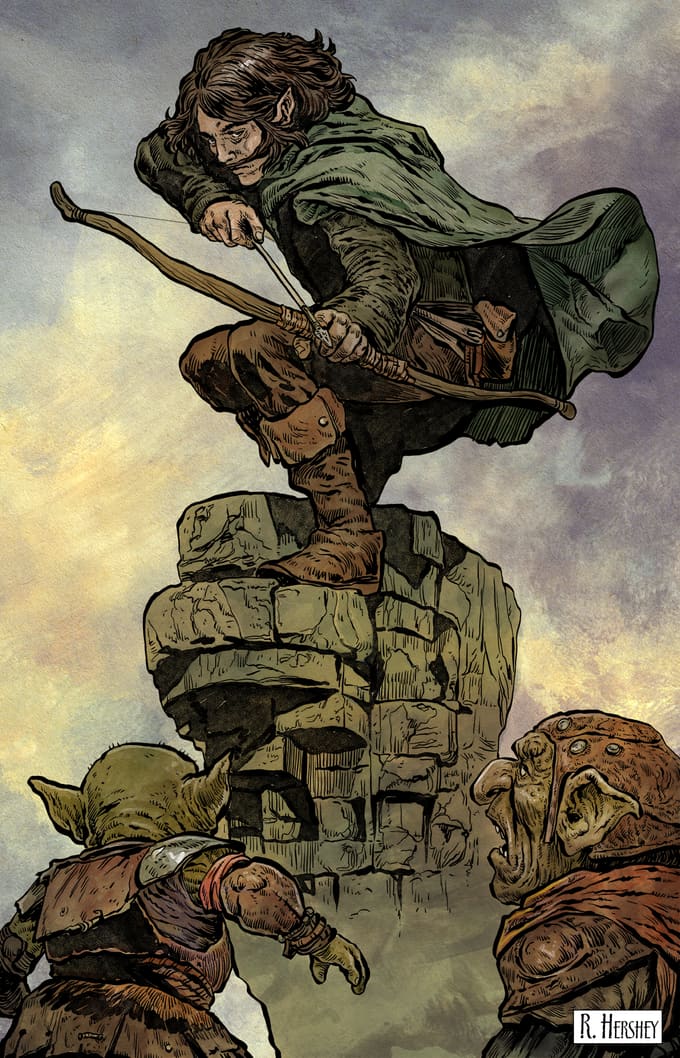
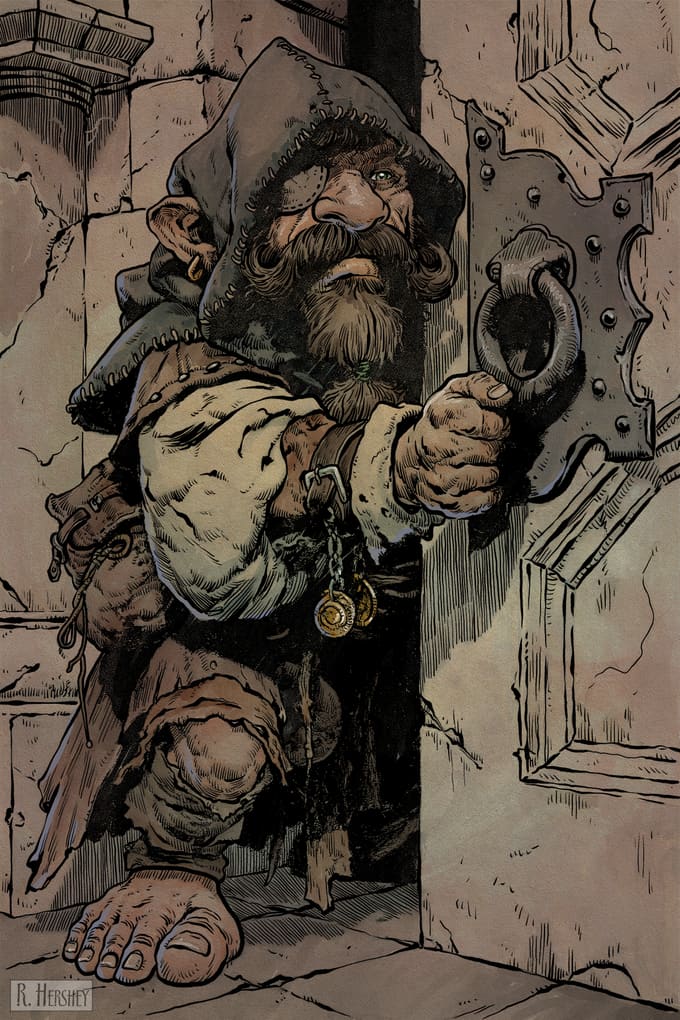
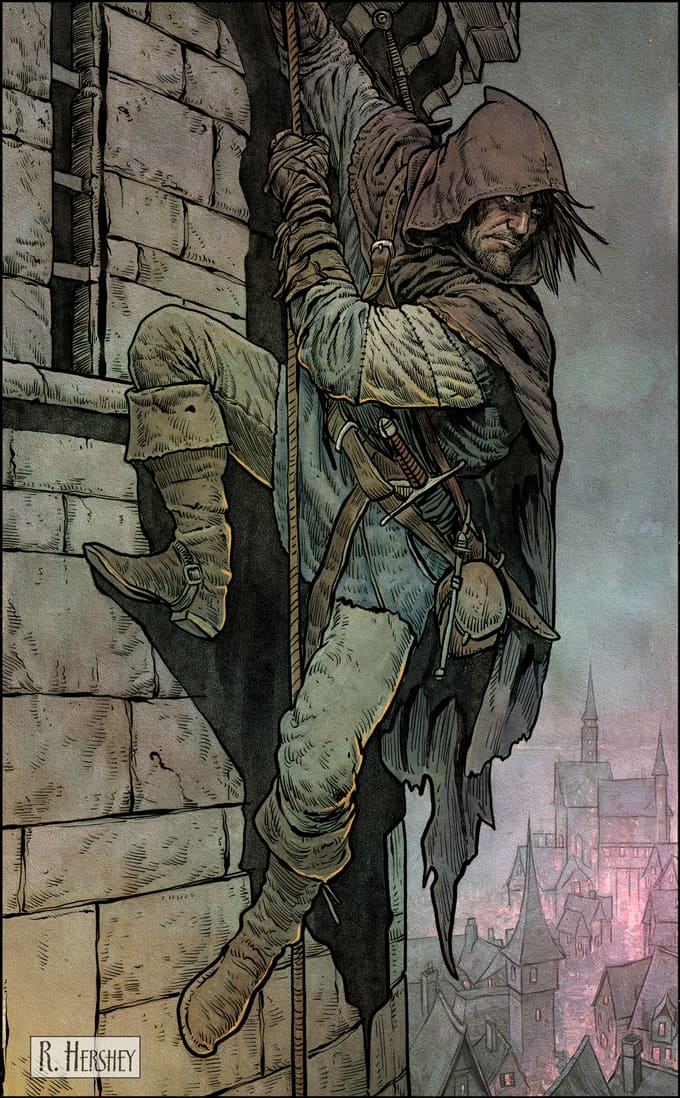
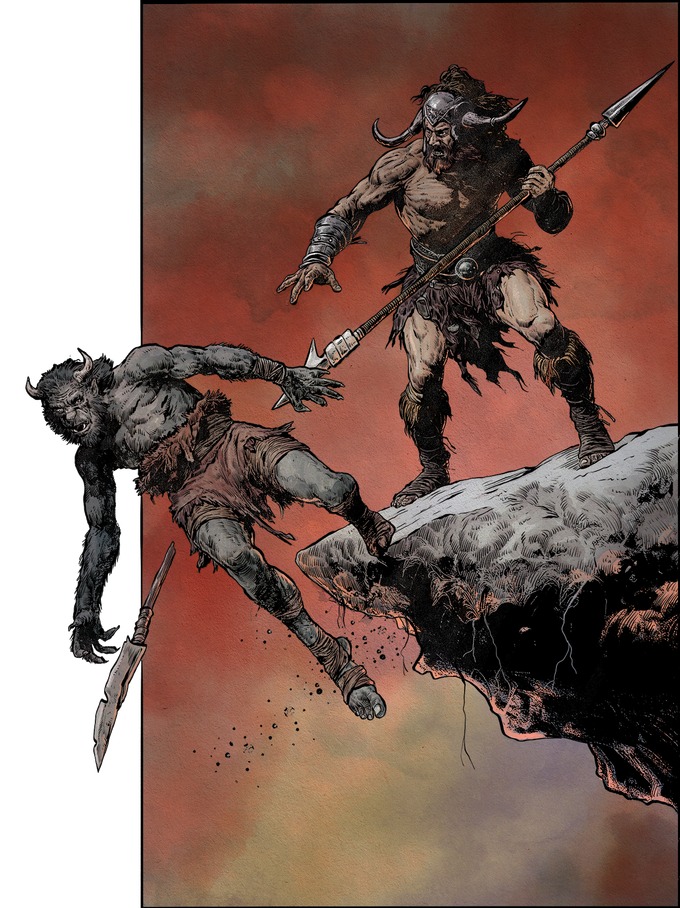
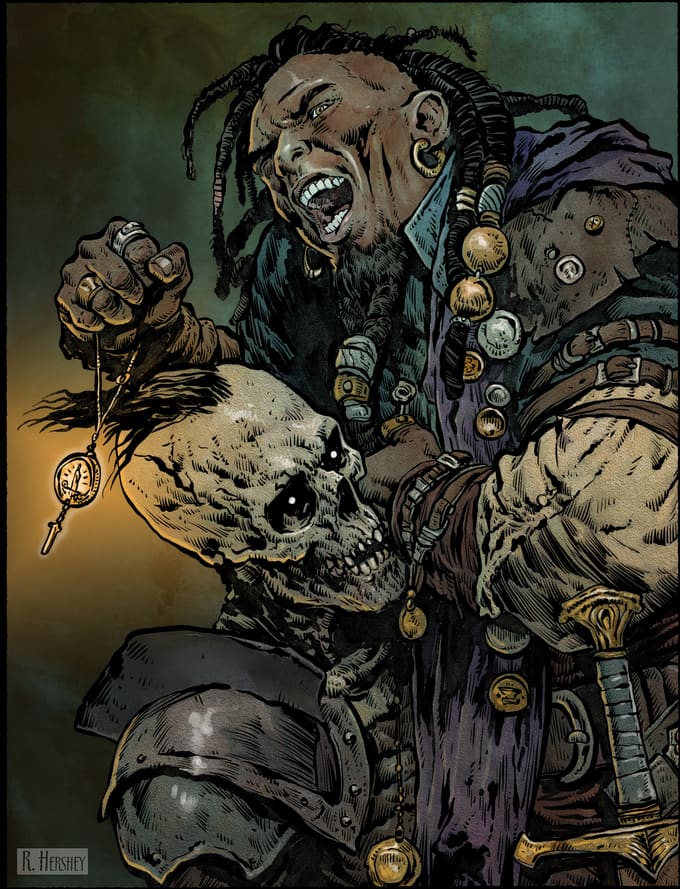
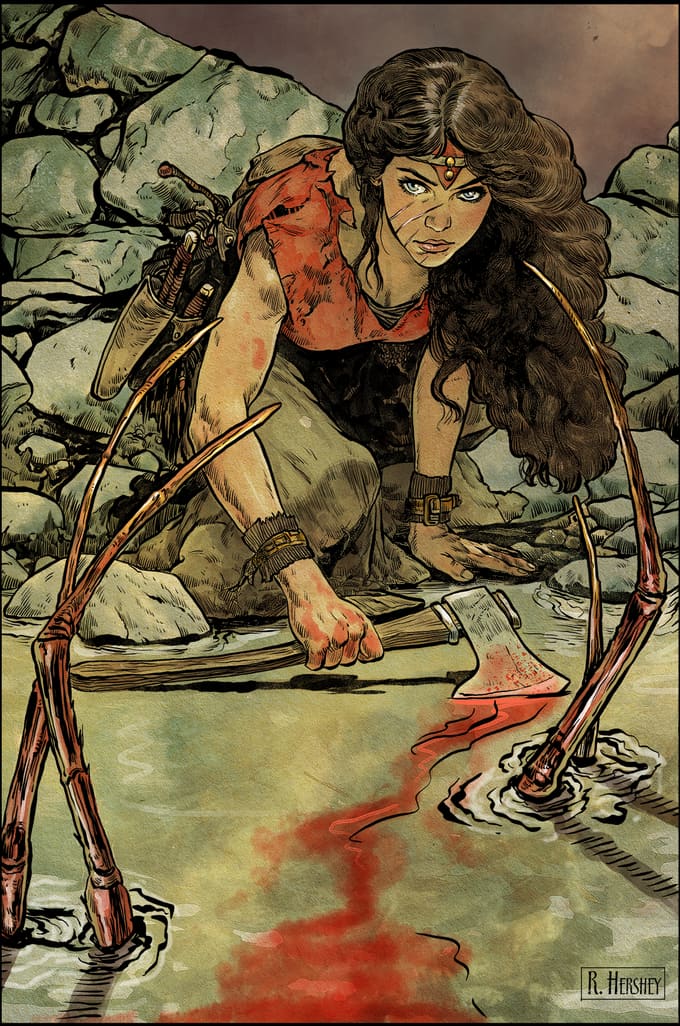
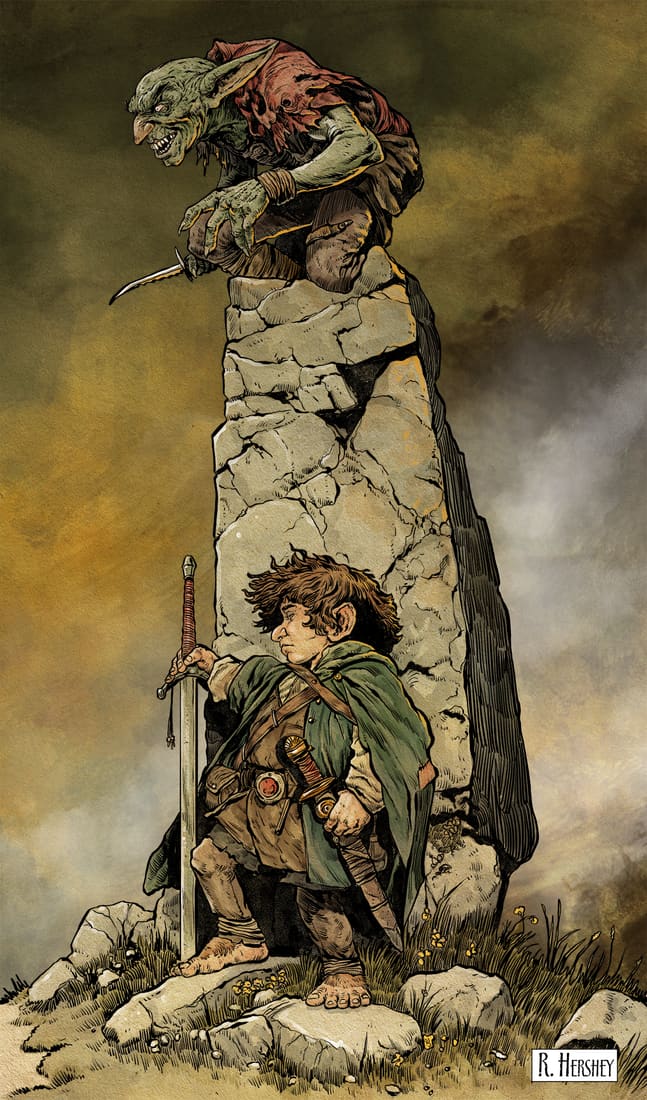
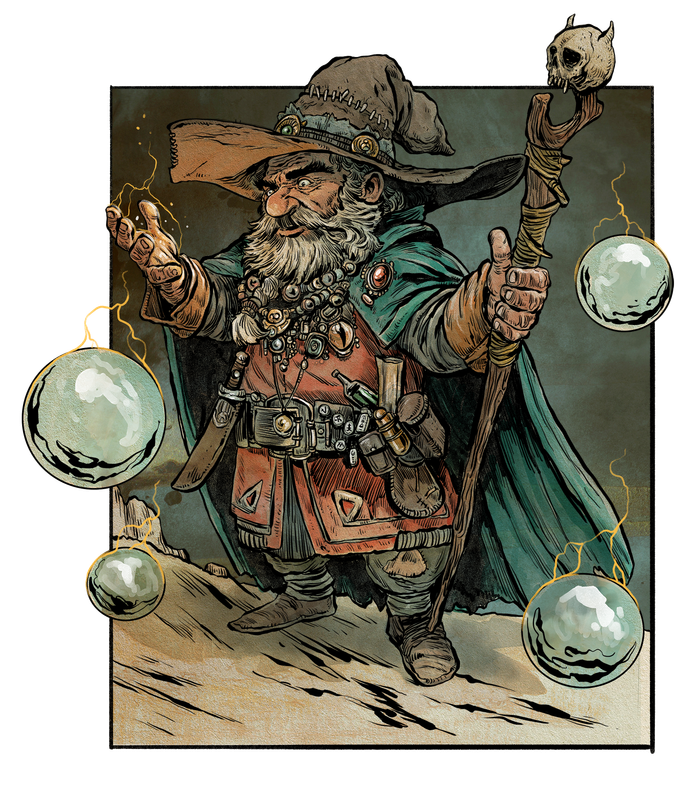
 Pre-Industrial
 Industrial
 Modern
 Spacefaring
 Esoteric
 Grade I · Standard
 Grade II · Refined
 Grade III · Pristine
 Grade IV · Masterwork
 Bronze
 Silver
 Gold
 Marks
 Common
 Uncommon
 Rare
 Epic
 Legendary
 Artifact